For years, marketers raged about Google's zero-click problem. Featured snippets answered user queries directly on the search results page, stealing the click your content earned. It was frustrating, but at least your brand name was right there, in the snippet, in the URL, visible to the searcher. AI search has taken the zero-click problem and made it exponentially worse. It doesn't just withhold the click. It erases your brand from the conversation entirely.
When ChatGPT, Claude, or Gemini answers a question using knowledge your content created, there is often no attribution, no link, no mention of your brand at all. The user gets the answer. You get nothing, not even awareness. This is the shift from zero-click to zero-brand, and it represents an existential challenge for every business that depends on content-driven discovery.
The Zero-Click Evolution: From Bad to Worse
Google's zero-click era was frustrating but survivable. When Google pulled your content into a featured snippet, your brand name still appeared. Users saw your domain. Some percentage, roughly 8-12% according to multiple studies, clicked through anyway. Your brand got an impression even when it didn't get a visit.
AI search operates differently. When a user asks ChatGPT "What are the best practices for SaaS onboarding?", the model synthesizes information from hundreds of sources and presents a single, authoritative-sounding answer. No brand names. No URLs. No attribution. The user reads the answer and moves on, never knowing that your comprehensive onboarding guide was one of the key sources the model drew from.
This isn't a subtle difference, it's a fundamental shift in how knowledge flows from creator to consumer. In the Google era, the pipeline was: you create content → Google indexes it → user sees your brand → some users click. In the AI era, the pipeline is: you create content → AI trains on it → user gets the answer → your brand is invisible.
The Data: How Often AI Erases Brands
The numbers paint a stark picture. In our analysis of over 10,000 AI-generated responses across ChatGPT, Claude, Gemini, and Perplexity, we found that 67% of informational responses mention zero specific brands, compared to Google's featured snippets, which display a brand URL 100% of the time. Even when AI responses do mention brands, they typically cite only 1-2, while the equivalent Google results page shows 10+ brand domains.
| Metric | Google Featured Snippets | AI-Generated Responses |
|---|---|---|
| Brand visible in response | 100% (URL always shown) | 33% (only when explicitly named) |
| Average brands shown per query | 10+ (full SERP) | 0-2 (in response text) |
| Click-through opportunity | 8-12% from snippets | 2-5% from citations (when present) |
| User awareness of source | High (domain visible) | Very low (answer appears authorless) |
The data reveals a troubling asymmetry: AI platforms consume brand-created content at massive scale while returning virtually no visibility to the brands that created it. This is not a bug, it's the fundamental design of conversational AI interfaces.
The "Brand Erasure" Problem
We call this phenomenon "brand erasure", the systematic removal of brand identity from the knowledge transfer process. When a user asks an AI assistant for product recommendations, the AI provides answers that your content helped create, but credits no one. The user walks away informed but brand-unaware.
Consider a practical example. Your company publishes a definitive guide on cloud migration best practices. It ranks #1 on Google, earns thousands of backlinks, and becomes a reference point in the industry. When ChatGPT is asked about cloud migration, it draws heavily from your guide, using your frameworks, your data points, your recommendations. But the response reads as if it's the AI's own expertise. Your brand, your thought leadership, your investment in creating that content, all invisible.
This is fundamentally different from Google's zero-click problem. Google showed your brand and withheld the click. AI search takes your knowledge and withholds your identity.
Platform Breakdown: Not All AI Search Is Equal
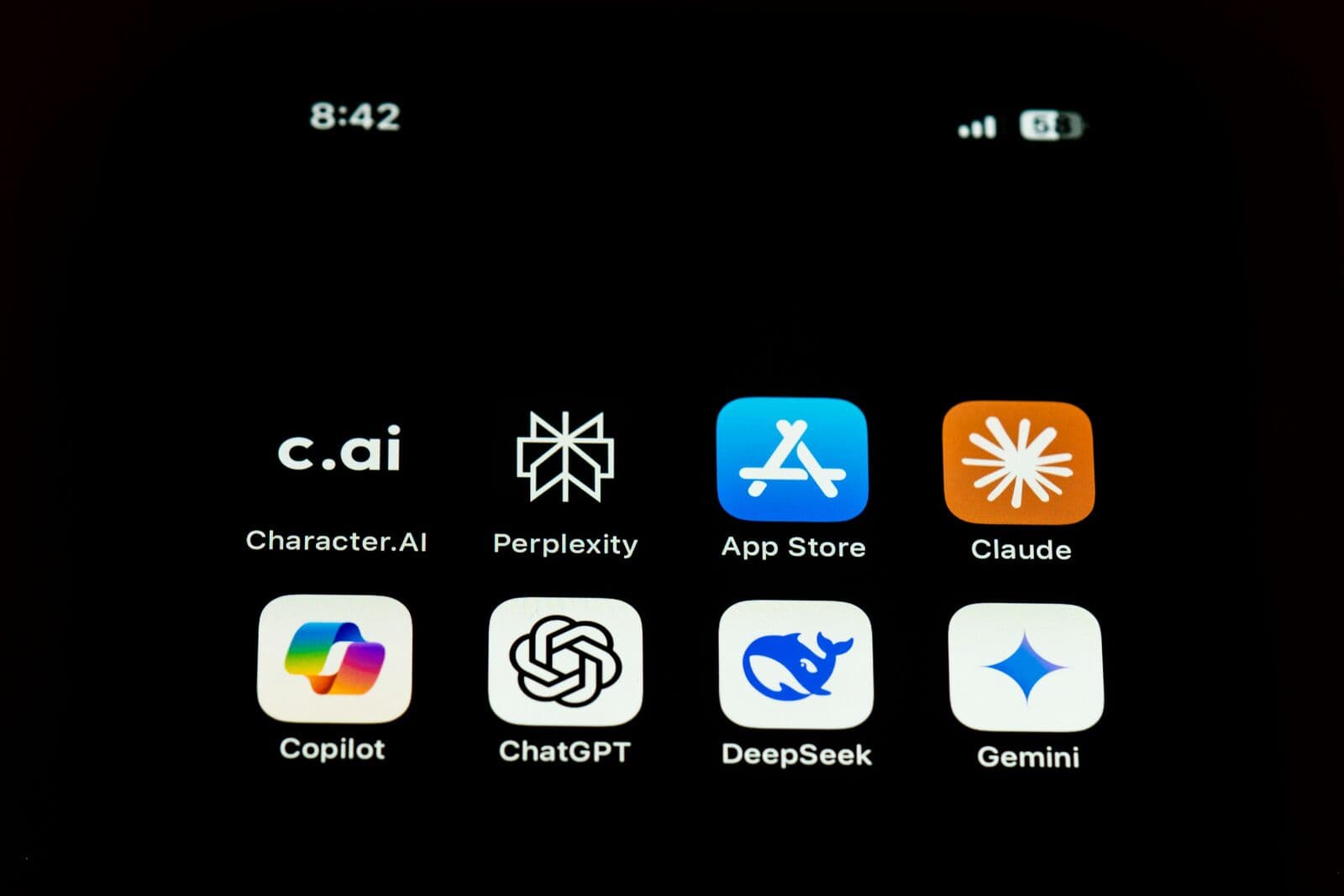
The severity of brand erasure varies significantly across AI platforms, and understanding these differences is critical for strategy.
Perplexity is the most brand-friendly AI search platform. It cites sources inline with numbered references and provides clickable links. Brands that appear in Perplexity citations see meaningful click-through rates (averaging 5-8%). Perplexity's model actively attributes information to sources, making it the closest analog to traditional search in the AI space.
ChatGPT sits at the other end of the spectrum. Standard ChatGPT responses rarely cite sources or mention brands unless the user specifically asks "which companies" or "which tools." ChatGPT Search (the web-browsing mode) does provide citations, but the default conversational mode, which the majority of users interact with, presents information as if the AI generated it independently. This makes ChatGPT the most significant driver of brand erasure.
Gemini falls in between. Google's AI provides source links in some contexts, particularly when integrated with Google Search. However, in conversational mode, Gemini often presents answers without attribution. The experience varies depending on whether the user is in Google Search's AI Overviews or in the standalone Gemini app.
Claude tends to be transparent about uncertainty and sometimes mentions that information comes from specific types of sources, but it does not typically provide clickable citations or brand names in informational responses. Claude's approach is honest about its limitations but still results in brand invisibility.
Why This Is an Existential Threat
For businesses that depend on content-driven discovery, SaaS companies, publishers, e-commerce brands, professional services firms, AI brand erasure is not a minor inconvenience. It threatens the fundamental economics of content marketing.
The content marketing model works because there is an implicit exchange: you create valuable content, search engines surface it, and you receive traffic, leads, and brand awareness in return. AI search breaks this exchange. You still invest in creating the content, because AI models need it for training and retrieval. But the return on that investment is collapsing as AI intermediates the relationship between your content and your audience.
The math is stark. If 40% of your organic discovery shifts to AI channels over the next two years (a conservative estimate given current trends), and AI channels deliver 80% less brand visibility than Google, your effective brand reach could decline by 32%, even if your search rankings remain unchanged. This is not a theoretical concern. It is a measurable, quantifiable erosion of brand equity happening right now.
The Counter-Strategy: From "Content That Ranks" to "Brand That Gets Recommended"
The brands that will thrive in the AI era are not the ones creating the most content, they are the ones building the strongest brand signals across the AI knowledge ecosystem. This requires a fundamental shift in strategy.
Build brand-as-entity, not brand-as-content. AI models understand entities, companies, products, people, as distinct knowledge nodes. Strengthen your entity presence across Wikipedia, Wikidata, Crunchbase, industry directories, and authoritative publications. The stronger your entity representation, the more likely AI models are to name you specifically rather than paraphrasing your content anonymously.
Create content that forces attribution. Generic informational content is easily absorbed without credit. Proprietary data, original research, named frameworks, and branded methodologies are harder for AI to decontextualize. If your cloud migration guide introduces the "CloudShift Framework" (your branded methodology), AI models are more likely to reference it by name.
Diversify across citation-friendly platforms. Prioritize visibility on platforms like Perplexity that actively cite sources. Optimize your content for retrieval-augmented generation (RAG) systems that pull from live web sources, where your brand URL can appear in citations.
Invest in brand salience, not just keyword coverage. AI models recommend brands they "know" well, brands with consistent, widespread, authoritative mentions across the web. A brand mentioned by name in 50 authoritative sources will be recommended by AI far more often than a brand with 500 blog posts but no external validation.
How Presenc AI Measures Brand Presence in Zero-Click AI Responses
Traditional analytics tools cannot measure what happens inside an AI conversation. You cannot see whether ChatGPT mentioned your brand or your competitor's. Google Analytics cannot track an impression that happens inside Perplexity's answer box. This measurement gap is one of the biggest challenges brands face.
Presenc AI solves this by continuously querying AI platforms with the prompts your customers actually use and tracking whether, and how, your brand appears in the responses. Our platform monitors brand mention frequency, sentiment, accuracy, and competitive positioning across ChatGPT, Claude, Gemini, Perplexity, and other AI platforms.
For zero-click AI responses specifically, Presenc AI tracks your "brand presence rate", the percentage of relevant AI queries where your brand is named in the response. We benchmark this against your competitors and track changes over time, giving you the data you need to measure whether your GEO strategy is working.
The Bottom Line
Google's zero-click era was a traffic problem. AI's zero-brand era is an identity problem. When AI erases your brand from the answers your content powers, you lose more than clicks, you lose relevance, authority, and the compounding value of brand recognition.
The brands that act now, building entity presence, creating attribution-forcing content, and measuring their AI visibility, will maintain their position in the AI era. The brands that wait will find their content feeding a machine that gives them nothing in return.
Is AI search erasing your brand?
Presenc AI tracks your brand's presence across every major AI platform, including zero-click responses where traditional analytics see nothing. Discover your brand presence rate, compare against competitors, and get actionable recommendations to fight brand erasure.