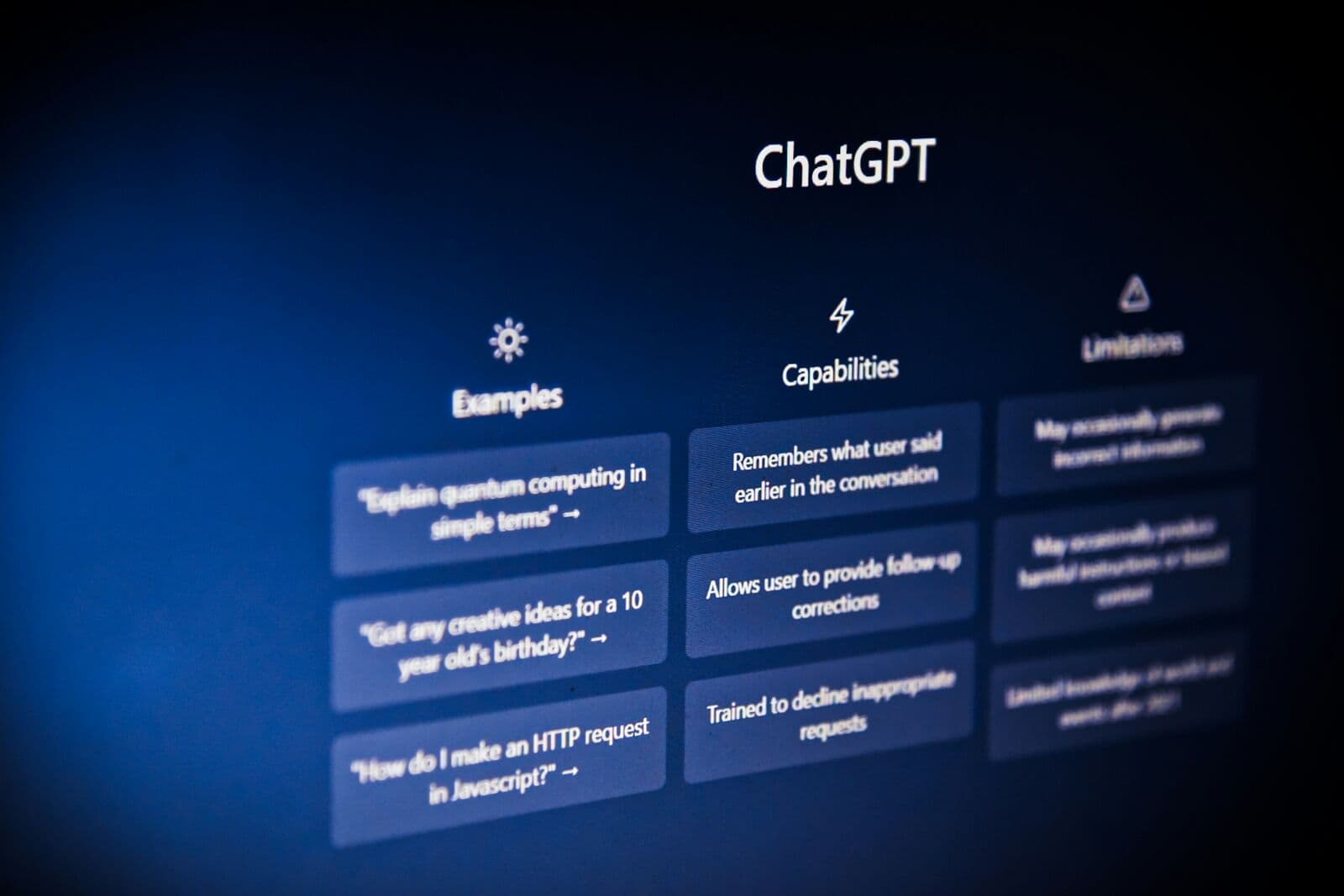
You ask ChatGPT: "What are the best project management tools?" It lists Asana, Trello, Notion... but not yours, even though your site ranks on Google's first page.
This paradox is becoming the rule, not the exception. Brands that dominate SEO are invisible to AI. Your backlinks don't matter. Your keyword strategy is irrelevant. ChatGPT operates on a completely different playbook.
Understanding what makes ChatGPT recommend your brand is the new frontier of digital visibility. And it starts with understanding what happens behind the scenes.
The Hidden Logic Behind ChatGPT's Recommendations
When ChatGPT answers a brand-related query, it's not searching the web like Google. It's running a complex pipeline that most marketers don't understand:
1. Pretraining: LLMs learn from massive web datasets, Wikipedia, books, academic papers, and open-source code, all collected before a specific cutoff date. If your brand wasn't mentioned in authoritative sources during training, you're starting from zero.
2. Retrieval & Real-Time Context: Models like ChatGPT with Bing integration and Perplexity use RAG (Retrieval-Augmented Generation) to fetch fresh content. But they don't just grab any webpage. They prioritize trusted, well-structured sources.
3. Semantic Understanding: AI doesn't think in keywords. It builds contextual embeddings (mathematical representations of meaning). Your brand needs to be semantically linked to the problems you solve.
4. Trust Signals: Models are tuned to recommend safe, credible, neutral options. Brand credibility signals matter infinitely more than keyword optimization tricks.
The AI Recommendation Pipeline
Training Data → Knowledge Graphs → Retrieval Layer → Prompt Context → Generated Recommendation
6 Factors That Determine AI Visibility
1. Knowledge Presence
Is your brand mentioned in trusted public data sources? Wikipedia is the gold standard, but Reddit discussions, GitHub repositories, Kaggle datasets, and industry forums also matter. AI models prioritize sources that appear consistently across multiple knowledge bases.
2. Semantic Authority
Do LLM embeddings associate your brand with relevant problem domains? If someone asks about "AI analytics platforms," does the model's internal representation connect that concept to your brand? This happens through consistent, contextual mentions across authoritative sources.
3. Entity Linking & Data Consistency
Your brand needs to be represented consistently across structured data sources. Conflicting information confuses AI models. Ensure your brand name, description, and category are uniform across Wikipedia, Crunchbase, LinkedIn, and product directories.
4. Citations & Authoritative Mentions
Are you referenced in datasets or media that appear in AI training corpora? A mention in TechCrunch, Wired, or an academic paper carries far more weight than your own marketing blog. The KDD 2024 GEO benchmark found that adding citations from reputable sources improved AI visibility by 132%.
5. RAG Fetchability
Does your website's content structure enable retrieval systems to find, chunk, and embed it effectively? Clean HTML, proper heading hierarchy, structured data markup (schema.org), and clear product descriptions make you RAG-friendly.
6. Contextual Integrity
Does your brand's narrative align with how AI interprets user intent? If someone asks for "beginner-friendly tools," but your brand is positioned as "enterprise-grade," the AI won't recommend you, even if you're technically a good fit.
GEO: The New Discipline for AI Visibility
We call this Generative Experience Optimization (GEO), the emerging discipline of optimizing your brand's presence in AI-generated responses.
GEO enables you to:
- Audit brand presence across ChatGPT, Claude, Gemini, and Perplexity
- Analyze contextual visibility: how LLMs describe or recommend your brand
- Strategically optimize data sources, structured content, and semantic relevance
- Measure your "AI Visibility Score" over time
Introducing Presenc AI
A visibility analytics platform that tracks how your brand appears across generative AI assistants and shows you how to improve.
How to Improve Your AI Visibility Score
1. Build Knowledge Presence
Get your brand added to Wikipedia (if notable), maintain active presence on GitHub (for B2B tech), and ensure you're listed in Crunchbase, Product Hunt, and industry-specific directories.
2. Create AI-Friendly Content
Structure your content with clear headings, factual comparisons, and comprehensive documentation. AI models prioritize well-organized, authoritative information over marketing fluff.
3. Implement Structured Data
Use schema.org markup for your products, services, and organization. This helps retrieval systems understand and categorize your brand correctly.
4. Earn Authoritative Citations
Focus on getting mentioned in publications, research papers, and industry reports that AI models trust. One citation in a respected source is worth more than a thousand backlinks.
5. Track Your AI Footprint
Use tools like Presenc AI to monitor how ChatGPT, Claude, and Perplexity describe your brand. Test different queries related to your industry. Benchmark against competitors. Identify gaps in your AI visibility.
The Bottom Line
In the era of AI assistants, visibility depends on recognition, not just ranking.
If ChatGPT doesn't know you exist, your next customer won't either. Brands that build authoritative training data presence now will start the next model cycle ahead. Those that don't will spend the following year catching up.
Discover how Presenc AI helps your brand become part of the AI conversation.
See which queries return your competitors instead of you across ChatGPT, Claude, Gemini, and Perplexity. Get a breakdown of why.